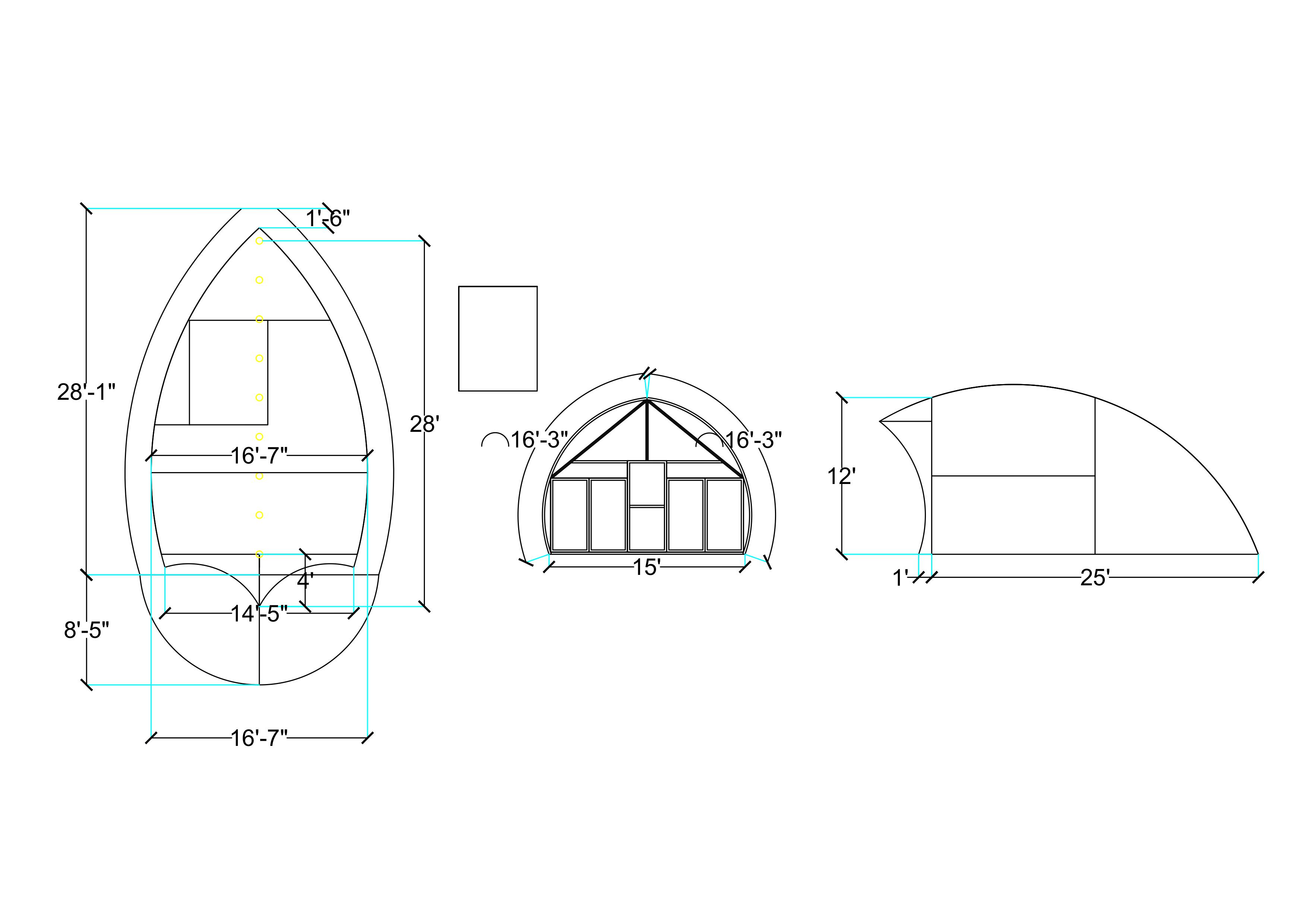
The Cocoon structure is a biophilic glamping pod designed for
intimate, nature-integrated living. With an organic, seed-like
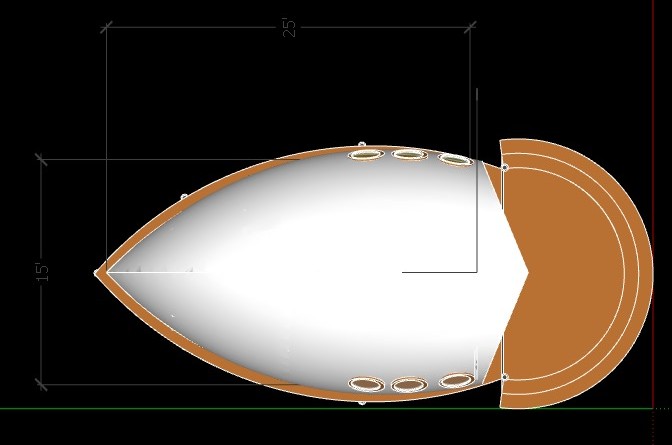
geometry and compact scale (15’ × 25’), the design prioritizes
environmental harmony, spatial efficiency, and immersive
outdoor connection rather than vertical construction.
1. Biomimetic Form & Geometry
The Cocoon is rooted in biomimicry, drawing
inspiration from natural protective forms such as seed pods,
coconuts, and weaver bird nests.
-
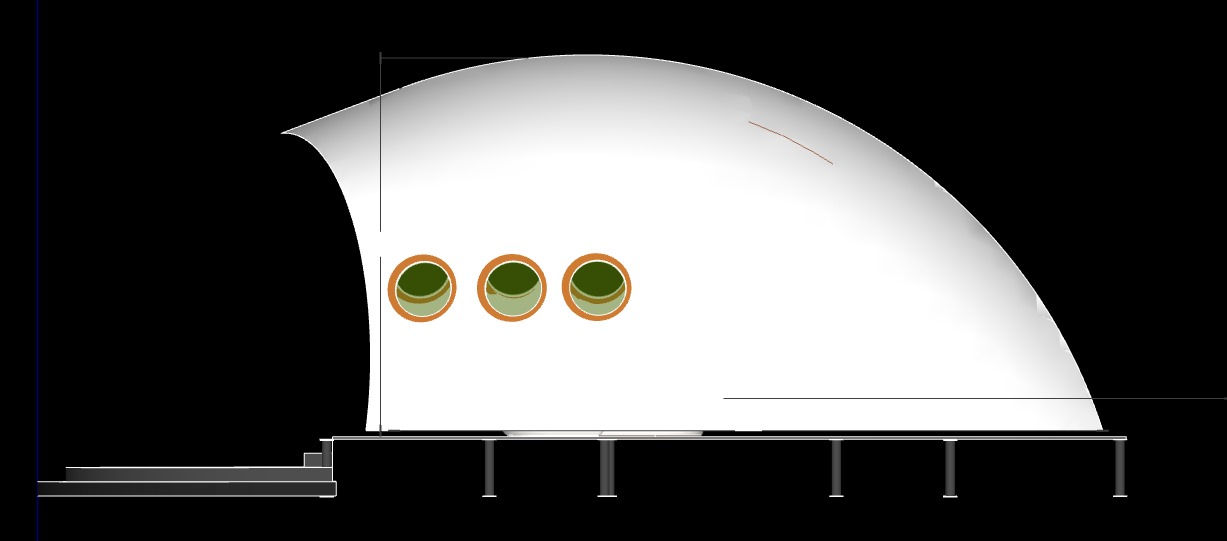
Aerodynamics: The tapered prow and curved
shell efficiently shed wind and rain.
-
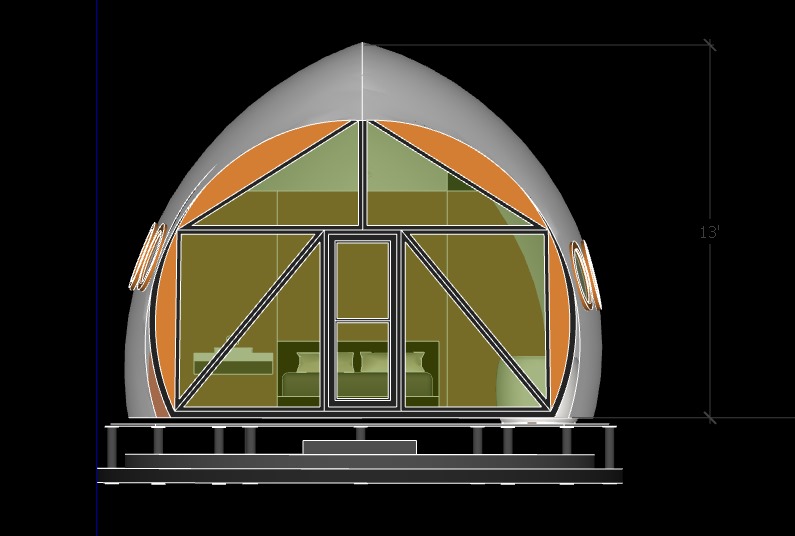
Structural Efficiency: The parabolic arch
form provides high strength without heavy internal
load-bearing walls.
-
Organic Identity: The smooth, continuous
shell reinforces a soft, non-intrusive visual presence.
2. Spatial Organization — The “Nautilus” Layout
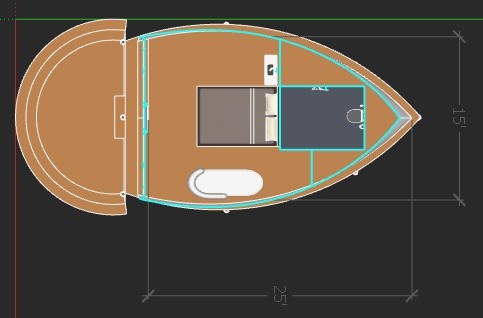
The floor plan follows a functional gradient from private to
social, optimizing every square foot.
-
Service Core: Bathroom and storage are
tucked into the narrow end, utilizing tight geometry.
-
Sleeping Sanctuary: The centrally placed
bed forms the heart of the pod.
-
Indoor–Outdoor Flow: The wide base opens
into a semi-circular deck, dissolving the boundary between
interior and landscape.
3. Lighting & Ventilation Strategy
Fenestration is carefully designed to balance privacy,
airflow, and immersive views.
-
Porthole Windows: Circular side windows
provide framed views, cross-ventilation, and privacy.
-
The “Great Eye”: A fully glazed front facade
captures daylight and anchors the pod toward a primary view.
-
Passive Comfort: Window placement enhances
natural airflow and reduces reliance on mechanical systems.
4. Materiality & Ground Connection
-
Exterior Shell: Likely formed from lightweight
composite panels or tensioned membranes over a rib structure.
-
Interior: Warm timber decking enhances
comfort and tactile quality.
-
Elevation: Raised on stilts to reduce site
disturbance, improve drainage, and protect from ground moisture.